
"Peru agriculture"
400 article(s) found

How to deal with the processing of single beans in Xuemai Manor? how to divide the grades of single beans in Xuemai Manor?
Professional baristas Please follow the Coffee Workshop (Wechat official account cafe_style) YUNGAS about 95% of Bolivia's coffee is produced in this region, which has enjoyed a high reputation in Europe in the past and recently. This area is the forest that extends to the east of the Andes, and in fact extends from Peru (Peru) to Peru through Bolivia.

Common sense of graded coffee to distinguish between coffee beans and coffee beans
● distinguishes the key names and specifications of coffee beans the name of the port of export of ● can tell the shipping route from the name of the port of exit marked. Coffee from the same origin or the same brand has a certain route, so it is also exported from the same port. For example, if it is marked as "Brazil. Santos", it means that this is coffee exported from Santos, but the one marked "Mocha" is taken as an example.

Comparison of regional characteristics of coffee beans in coffee producing areas / coffee bean producing areas in the world
Coffee has an inexplicably strong attraction to both literati and gluttons. Since you are so curious or passionate, let's take a look at which parts of the world produce coffee. The most complete knowledge of coffee producing areas in the world! Tools / raw materials the world's most important quality coffee producing areas / step 1, Asia 1. Indonesia (Indonesia) well-known representative coffee: claw
Fine coffee beans: teach you to distinguish coffee beans and coffee beans graded coffee basics
● Key to distinguish the name and specification of coffee beans ● Export port name From the indicated export port name, you can know the route of transportation. Coffee of the same origin or brand has a certain route, so it is also exported from the same port. For example, if the label is "Brazil." Santos "means it's coffee coming out of Santos, except when it's marked mocha.
Coffee Flavor Analysis of Coffee Flavor from different Coffee producing areas in the World
Coffee flavor from different coffee producing areas around the world: Tarrazu in Costa Rica is one of the major coffee producing areas in the world, with a light and pure flavor and pleasant aroma. Costa Rican coffee has full grains, ideal acidity and unique strong flavor. Tarrazu of Costa Rica is one of the major coffee producing areas in the world, with a light and pure flavor.
Coffee flavors from different coffee producing areas around the world Tarasu of Costa Rica
Coffee flavor from different coffee producing areas around the world: Tarrazu in Costa Rica is one of the major coffee producing areas in the world, with a light and pure flavor and pleasant aroma. Costa Rican coffee has full grains, ideal acidity and unique strong flavor. Tarrazu of Costa Rica is one of the major coffee producing areas in the world, with a light and pure flavor.
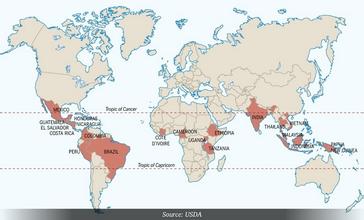
The World Coffee Map explains in detail the specific distribution points and geographical names of the world coffee map.
Costa Rican coffee has full grains, ideal acidity and unique strong aroma. Tarrazu of Costa Rica is one of the major coffee producing areas in the world. Costa Rica, with its fertile volcanic soil and good drainage, is the first country in Central America to grow coffee and bananas for commercial value. Coffee and bananas are

Honduras is expected to become the world's fourth largest coffee exporter
Professional baristas Exchange follow Coffee Workshop (Wechat official account cafe_style) local operators say that coffee is the "heart" of Honduras and its primary export agricultural product, which is expected to grow by 40% this year, making Honduras the fifth largest coffee exporter in the world. According to the Honduran Coffee Association (Ihcafe), since 2003, Hongguo
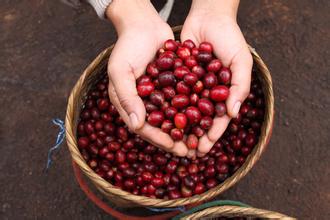
Distinguish coffee beans and the grading of coffee beans how to distinguish the quality of coffee beans coffee knowledge
● distinguishes the key names and specifications of coffee beans the name of the port of export of ● can tell the shipping route from the name of the port of exit marked. Coffee from the same origin or the same brand has a certain route, so it is also exported from the same port. For example, if it is marked "Brazil." "Santos" means that this is coffee exported from Santos, with the exception of those marked "mocha".

A country of mountains. Bolivian coffee growing area in La Paz
Bolivia is described as a country of mountains, southeast of Peru. La Paz is 3660 meters above sea level. Coffee cann't grow in this cold. But YUNGAS, northeast of La Paz, borders the Amazon basin. The altitude is slightly lower. About 1500-2500 meters. The average annual temperature is about 10-15 degrees and there is no frost damage in winter. Fertile soil is characteristic of Bolivia's main coffee-producing area

High altitude coffee: history, variety and flavor of Bolivian coffee
As you have noticed: people, countries and their coffee. Bolivia's high altitude, amazing natural environment and the history of coffee make it a very special place. Bolivia has an interesting past. Although it is a commercially viable coffee exporter, its output has always been very high.

Introduction to Bolivian Coffee Manor, producing area of Alpine country Coffee
This is the description of Bolivian coffee; Bolivia, located on the southeast side of Peru, is. La Paz (capital) is 3660 meters above sea level. Coffee cannot be grown in such a cold place. But YUNGAS, northeast of La Paz, borders the Amazon basin. The altitude is a little lower. About 1500-2500 meters. The average annual temperature is about 10-15 degrees without frost damage in winter. The fertile soil is characteristic of the main coffee producing areas in Bolivia. America

Introduction to the Blood Manor of the Coffee producing country of Bolivia
In boutique coffee, this is the description of Bolivian coffee; Bolivia, located on the southeast side of Peru, is an alpine country. La Paz (capital) is 3660 meters above sea level. Coffee cannot be grown in such a cold place. But YUNGAS, northeast of La Paz, borders the Amazon basin. The altitude is a little lower. About 1500-2500 meters. The average annual temperature is about 10-15 degrees without frost damage in winter. The fertile soil is Bolivia.

Treatment of coffee beans in manors in Bolivian coffee bean producing areas
This is the description of Bolivian coffee; Bolivia, located on the southeast side of Peru, is an alpine country. La Paz (capital) is 3660 meters above sea level. Coffee cannot be grown in such a cold place. But YUNGAS, northeast of La Paz, borders the Amazon basin. The altitude is a little lower. About 1500-2500 meters. The average annual temperature is about 10-15 degrees without frost damage in winter. Fertile soil is a special feature of the main coffee producing areas in Bolivia.

Brazil has suffered another "natural disaster", and the world's largest coffee exporter has to import coffee beans.
Abstract: Brazilian Agriculture Minister Blairo Maggi2 said on the 20th that the Brazilian government plans to allow the import of robusta coffee beans from Vietnam. The decision sparked protests from coffee growers. On February 21st a spokesman for the state of Espiritu Santo said it had put forward a proposal to block the government's move in the Senate. The state has mobilized other coffee-producing areas to protest the decision

Taste of Bolivian Coffee Manor Yongas, northeast of La Paz, snow vein manor
This is the description of Bolivian coffee; Bolivia, located on the southeast side of Peru, is an alpine country. La Paz (capital) is 3660 meters above sea level. Coffee cannot be grown in such a cold place. But YUNGAS, northeast of La Paz, borders the Amazon basin. The altitude is a little lower. About 1500-2500 meters. The average annual temperature is about 10-15 degrees without frost damage in winter. Fertile soil is a special feature of the main coffee producing areas in Bolivia.

Bolivian coffee flavor what coffee beans are used for hand-brewed coffee
In boutique coffee, this is the description of Bolivian coffee; Bolivia, located on the southeast side of Peru, is an alpine country. La Paz (capital) is 3660 meters above sea level. Coffee cannot be grown in such a cold place. But YUNGAS, northeast of La Paz, borders the Amazon basin. The altitude is a little lower. About 1500-2500 meters. The average annual temperature is about 10-15 degrees without frost damage in winter. The fertile soil is Bolivia.

There are bright sour berries. Introduction to Bolivian coffee with almond flavor and hazelnut sweetness
In boutique coffee, this is the description of Bolivian coffee; Bolivia, located on the southeast side of Peru, is an alpine country. La Paz (capital) is 3660 meters above sea level. Coffee cannot be grown in such a cold place. But YUNGAS, northeast of La Paz, borders the Amazon basin. The altitude is a little lower. About 1500-2500 meters. The average annual temperature is about 10-15 degrees without frost damage in winter. The fertile soil is Bolivia.

Introduction to the producing area of high-quality coffee beans in Ecuador coffee manor with balanced acidity
The Republic of Ecuador is located in northwestern South America. It is bordered by Colombia in the northeast, Peru in the southeast and the Pacific Ocean in the west. It covers an area of 256370 square kilometers and the coastline is about 930km long. The equator runs north of the border, and Ecuador means the Spanish equator, which means Guayaquil is Ecuador's largest seaport. It faces the Pacific Ocean and backs against Mount Santa Ana. There is Pune Island nearby.

Introduction of Bolivian Coffee Manor Yongas, northeast of La Paz
The coffee had better not be reheated. When cooking, you should pay attention to only the amount needed for each cooking, and it is best to drink it when it is just cooked. The best drinking temperature for coffee is 85 degrees Celsius. In boutique coffee, this is the description of Bolivian coffee; Bolivia, located on the southeast side of Peru, is an alpine country. La Paz (capital) is 3660 meters above sea level. Coffee cannot be grown in such a cold place. But pull